
The motor temperature monitoring device is a crucial overheat protection system for motors, primarily providing protection by directly measuring the motor’s body temperature. It compensates for the limitations of traditional current-based protection, which cannot detect hidden overheating issues such as poor heat dissipation or slight overloading, and is widely used in medium to large-sized and high-voltage motors. The complete protection process—comprising temperature acquisition, signal transmission, logical comparison, and graded response—ensures safe operation of the motor. Common temperature-sensing elements used in these devices are PTC thermistors and PT100 platinum resistors. Both are pre-embedded in critical heating areas such as the end portions of the stator windings and bearing zones, enabling real-time temperature monitoring. However, they differ significantly in measurement principles and protective characteristics. The PTC is a positive temperature coefficient nonlinear thermistor that maintains a stable and relatively low resistance at normal temperatures. Only when the motor reaches its preset critical overheating threshold (Curie point) does the resistance suddenly and sharply increase. As a point-type protection element, it merely detects whether the temperature exceeds limits without providing continuous temperature data. In contrast, the PT100 is a linear platinum resistor with a standard resistance of 100Ω at 0°C, exhibiting a precise linear relationship between temperature and resistance, allowing continuous and accurate real-time temperature measurement. During normal motor operation, both types of sensors maintain stable resistance values, sending normal signals to the temperature controller or integrated protector. The system then determines that the motor is operating normally and does not trigger any protective actions.
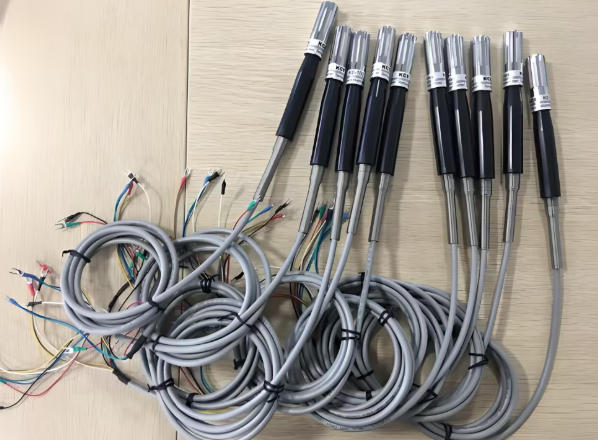
When a motor experiences prolonged overload, poor heat dissipation, phase loss, stalling, or insulation aging, the winding or bearing temperature will abnormally rise. Both types of temperature sensors respond simultaneously, but their protection logic differs. The PTC resistor undergoes a sudden, critical change in resistance, prompting the system to immediately identify severe motor overheating and trigger hard protection. In contrast, the PT100 sensor gradually and linearly increases its resistance with rising temperature, continuously transmitting precise temperature signals to the motor protection control system. Based on real-time PT100 readings, the system accurately compares against preset multi-level warning and trip thresholds, enabling tiered and precise control—this is why PT100 is preferred for high-voltage, large motors, while PTC is commonly used in standard medium- and large-sized motors. When the temperature reaches a preset warning threshold, the temperature monitoring device issues audible and visual alarms to alert personnel on-site to address potential hazards promptly. If the temperature continues to rise and reaches the trip threshold, the device immediately outputs a shutdown command, cutting off the motor power supply to enforce protective action. In summary, motor temperature monitoring devices effectively prevent winding insulation aging, burnout, and bearing seizure through direct temperature measurement and graded protection, ensuring safe, stable, and long-term motor operation.
Post time: Oct-12-2026