
A 6 kV, 1000 kW high-voltage motor experienced a rotor winding to ground fault. Due to urgent production demands, there was little time to spare. After professional personnel identified the faulty coil, it was directly bypassed and removed. The motor continued operating for six months before undergoing major overhaul. This method is also commonly adopted in many motor repair processes. Theoretically, all coils in the motor winding must meet electrical performance requirements as a necessary condition for normal operation. When inter-phase, ground, or turn-to-turn faults occur in the winding, continued operation of the motor will inevitably lead to worsening or spreading of the fault. Only by promptly addressing the fault points can existing faults be effectively repaired or isolated.
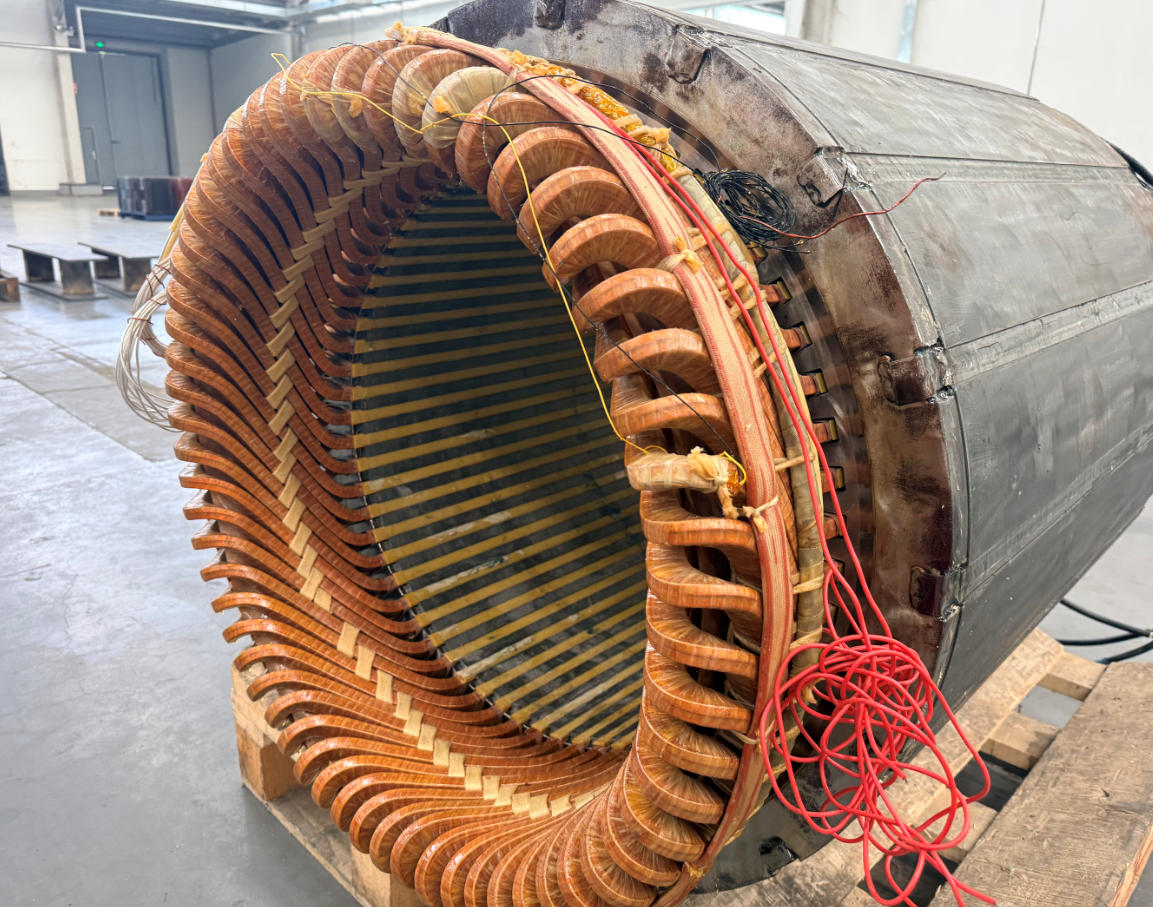
In special cases, therefore, a localized fault isolation approach can be adopted based on the impact of the fault point: by adjusting the wiring connections, the faulty coil can be electrically isolated from the rest of the winding—commonly referred to as “bypassing” or “cutting out.” This allows the motor to operate under suboptimal conditions. Motors treated this way may exhibit some degree of current imbalance during operation, and in some cases generate electromagnetic noise; in severe instances, the motor’s load capacity may degrade to varying degrees. Nevertheless, this method at least helps alleviate certain production issues. Generally, applying this treatment to the rotor has less adverse effect than doing so to the stator winding, which tends to produce more significant negative consequences.
Post time: Oct-22-2026