
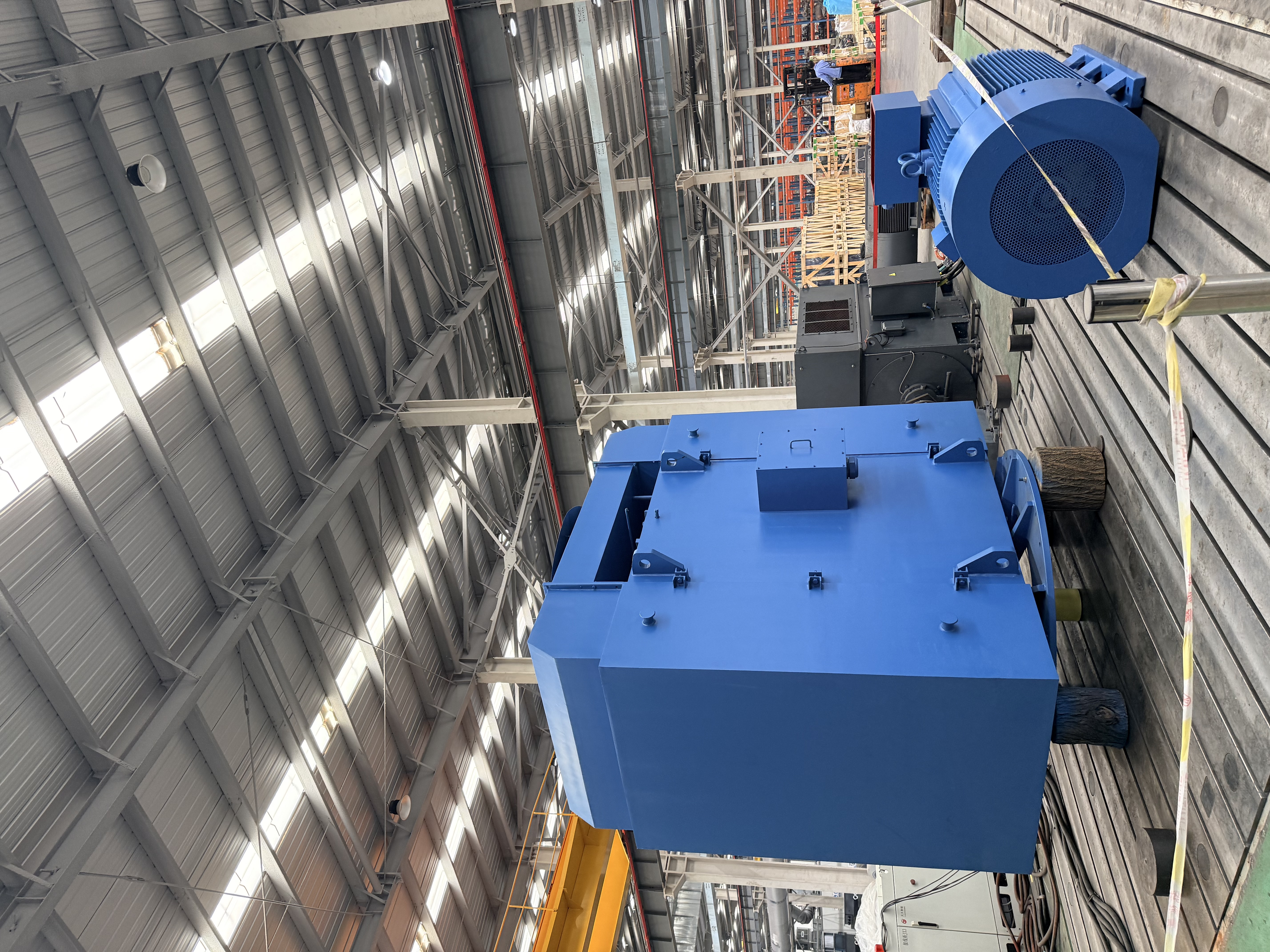
A vertical motor is one whose axis of output shaft is perpendicular to the chassis or the transmission mechanism. Its prominent feature is that the mounting holes are centered on the output shaft and are evenly distributed around it. The vertical motor is vertically arranged on the driven machinery and the motor shaft is also vertically driving the machinery. It is widely used in industrial production, such as vertical water pumps, vertical lathes, etc.
Model Classification
The model of a vertical motor is composed of two parts: the product code and the specification code, arranged in sequence. The product code represents the motor series code, such as:
Most vertical motors adopt the popular box-type structure in the international market. The square base is made of steel plate welding and has the advantages of good rigidity and light weight. Changing the cover or air (water)-air cooler on both sides of the base constitutes different series of motors.
Bearing System
According to whether the motor bears axial force or the magnitude of the axial force, the bearing structure on the motor has two types: rolling bearings or sliding bearings on the upper and lower sides, and the bearing structure on the lower side is rolling bearings. Motors with rolling bearing structure all have a non-stop oil addition and removal device.
Terminal Box
The main terminal box is a sealed structure, with a protection level of IP54. The inlet hole of the terminal box can be converted to up, down, left, or right, and there is a separate grounding terminal inside the box.
Post time: Oct-10-2026