
The fundamental difference between high-voltage motors and low-voltage motors lies in the disparity of their rated voltages. For motors of the same power, the characteristic of high-voltage motors is that the rated voltage is high and the rated current is small, while the characteristic of low-voltage motors is that the rated current is large and the rated voltage is low. For high-power motors, in order to balance the suitability of the energized conductors and avoid the limitations of multi-strand winding and large current components, more high-voltage designs are adopted. That is, through a higher rated voltage, the rated current of the motor is minimized to the greatest extent, and there is greater freedom in the selection of conductor specifications. However, the cost of insulation materials for high-voltage motors is relatively high, and the manufacturing process is also relatively cumbersome. Therefore, sunvim motor, as a manufacturer, will make reasonable choices of the rated voltage for the motors based on the specific product and working conditions.
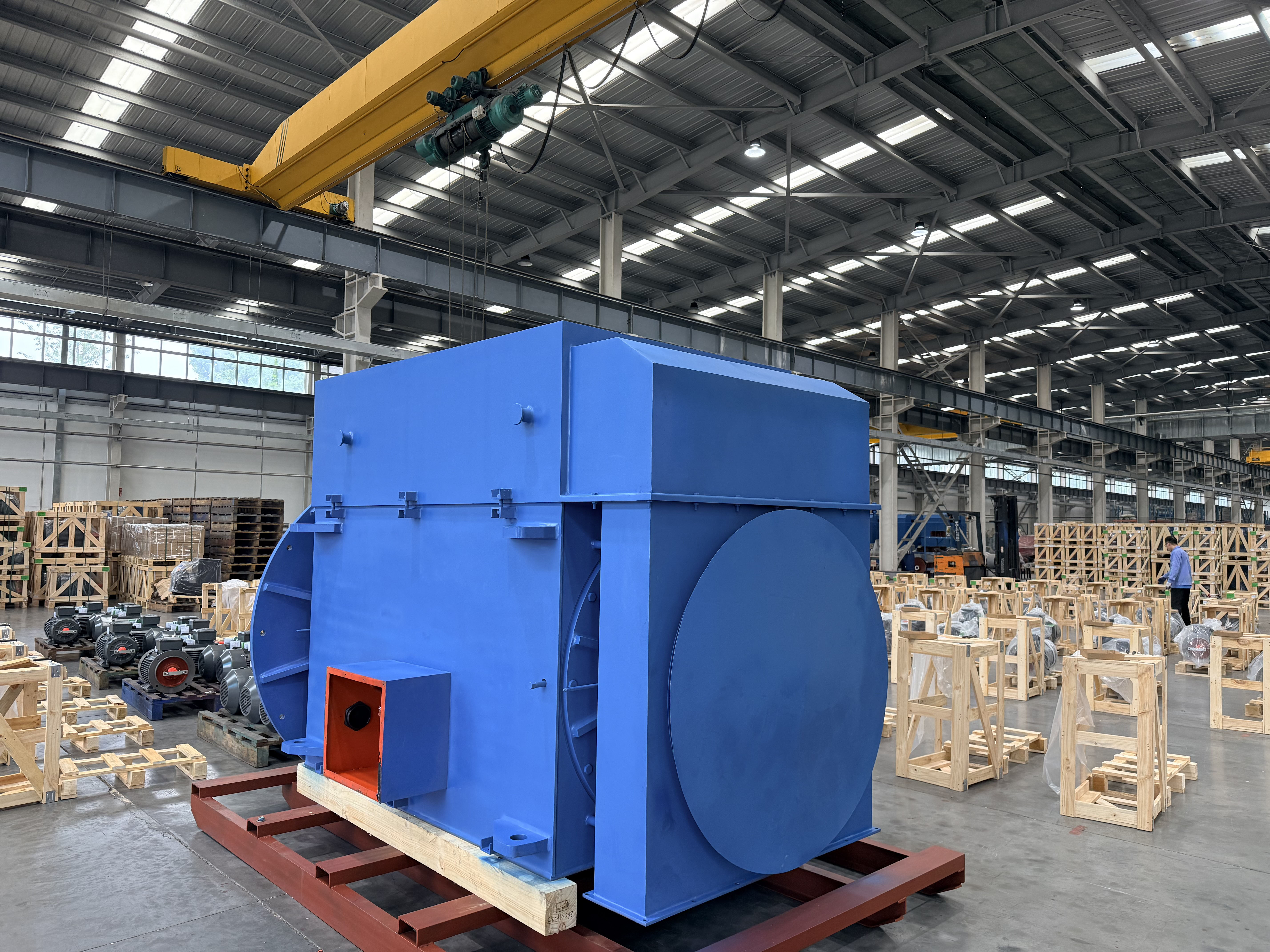
In the product technical conditions of high-voltage motors, the minimum power of high-voltage motors is usually 220 kilowatts, while in the power range design of low-voltage motors, there are also power ranges exceeding 220 kilowatts. That is, there is some overlap in the power ranges of high-voltage and low-voltage motors. For the same high-power motor, it can be designed as a low-voltage motor or a high-voltage motor, but when the power is large, the manufacturing difficulty of the design based on the low-voltage approach will be very high, and the capacity of the related power distribution facilities will also be large. Therefore, for larger power motors, it is recommended to design them as high-voltage motors.
Post time: Nov-24-2026