
For low-voltage high-power motors, to achieve a large power output, it can only be accomplished through a large current. A large current requires conductors with a sufficient cross-sectional area. Whether it is the electromagnetic wire itself or the motor lead wire, they must have a sufficient cross-sectional area to meet the large current. Correspondingly, the iron core slots must also be increased accordingly. The control equipment that matches the motor must also be able to withstand the impact of a large current.
If high voltage is adopted, the current of the motor can be reduced, and the selection of the cross-section of the electromagnetic wire becomes more flexible. However, the electromagnetic wire used in high-voltage motors, as well as the corresponding insulation structure of the windings and the wiring system, must all meet the special requirements of high-voltage motors.
From the perspective of motor power distribution, low-voltage motors must be supplied through transformers, while high-voltage motors can be directly connected to the power supply lines, which will reduce the cost of power distribution.
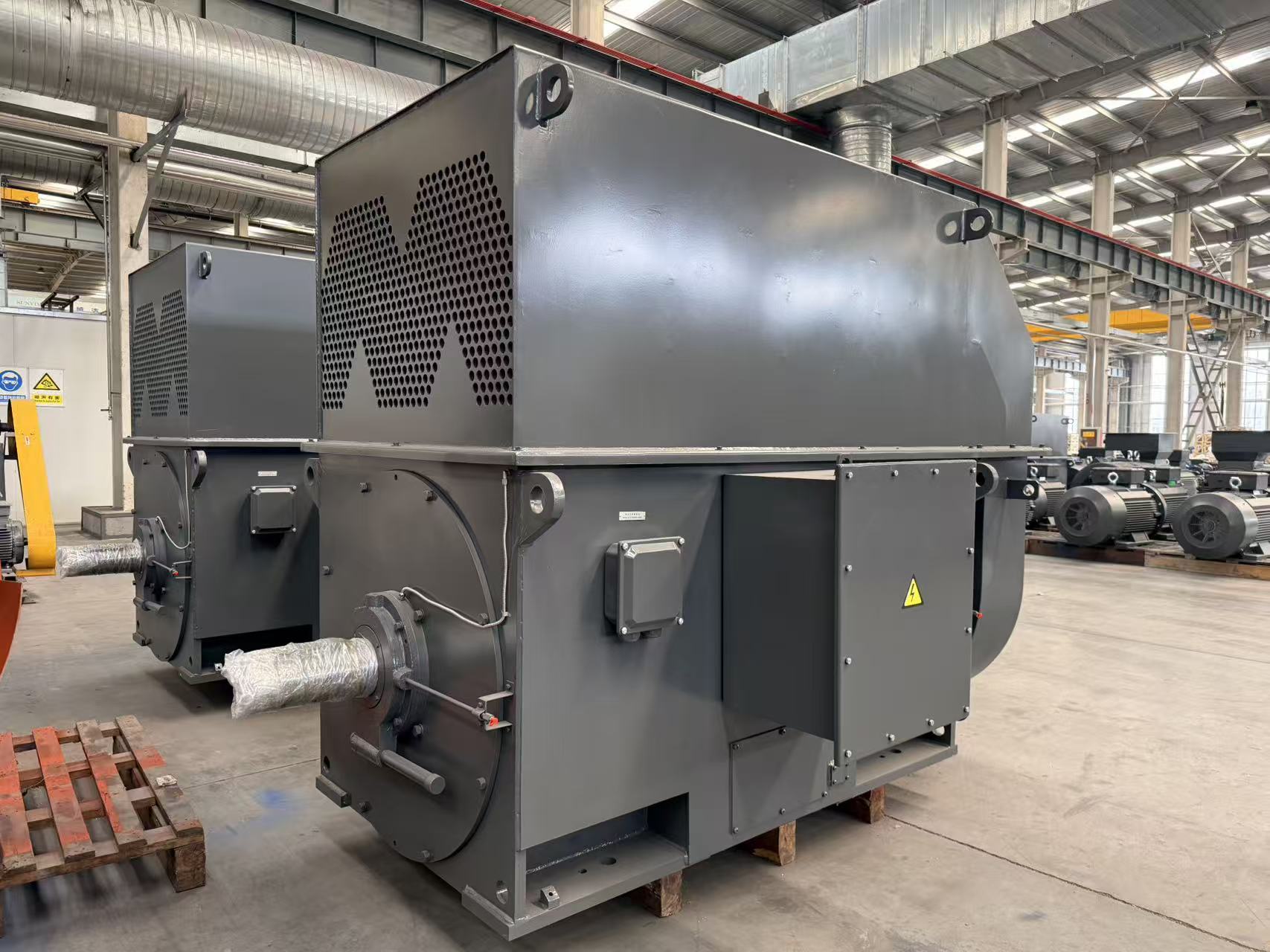
From the perspective of power realization, high-voltage motors inherently possess significant advantages. However, from the aspects of manufacturing and application, they also have considerable limitations: the cost of the windings in high-voltage motors is relatively high. This includes not only the procurement cost of the electromagnetic wire itself but also the costs of the associated mica materials, high and low resistance tapes, magnetic slot wedges, and other materials, which all increase accordingly. Analyzing the difficulty and cost of winding processing, it is relatively challenging. Each coil of the motor must undergo external insulation wrapping, testing, and insulation treatment processes, all of which are rather complex. Correspondingly, the processing cycle and labor costs are also higher, and not every motor factory can handle this. From the perspective of application, high-voltage motors have much higher requirements for the operating environment compared to low-voltage motors. This also includes the motor’s ventilation and heat dissipation devices, bearing systems, and measures to prevent shaft currents, all of which invisibly increase the manufacturing difficulty of high-voltage motors.
Post time: Apr-09-2026