
In industrial frequency conversion speed control systems, installing an independent cooling fan for the frequency-controlled motor is a key measure to ensure stable equipment operation and extend the motor’s service life. The core objective is to address the industry-wide challenge of insufficient heat dissipation at low speeds in conventional self-ventilated motors. In standard motors, the cooling fan is coaxially connected to the rotor, so its speed varies directly with the motor speed, relying on the motor’s rotation to drive the fan for cooling. While this method meets heat dissipation requirements at rated and medium-to-high speeds, it is entirely unsuitable for the complex operating conditions of variable frequency speed control.
The core advantage of variable-frequency motors is their wide speed range adjustment capability. In many industrial production scenarios, motors need to operate at low frequencies and low speeds for a long time, or maintain a constant torque output at low speeds. When the motor operates at low speed, the rotational speed of the built-in fan synchronously decreases significantly, resulting in a sharp reduction in ventilation volume and a substantial decline in heat dissipation capacity. For load equipment such as conveyors, mixers, and hoists with constant torque, the working current does not decrease when operating at low speed. The motor winding continuously generates a large amount of heat, and the balance between heat dissipation and heat generation is severely disrupted, which can easily cause the winding temperature to exceed the limit, accelerate the aging of the insulation layer, and lead to frequent faults such as overheating of the motor, tripping, and even direct burning during long-term operation, seriously affecting the continuity of production. Independent fans are powered by a separate power supply and are completely decoupled from the motor’s rotational speed. They can continuously output a constant ventilation volume, providing forced air cooling for the motor in the entire speed range, fundamentally addressing the issue of low-speed heat dissipation. In addition to long-term low-speed constant torque conditions, scenarios where the equipment frequently reverses direction or operates with short-term overload also rely heavily on independent fans. In these scenarios, the motor’s rotational speed fluctuates frequently, the built-in fan’s cooling is extremely unstable, and the additional heat generated by the overload further increases the risk of motor overheating. Independent fans can provide stable cooling throughout the process, effectively avoiding potential faults.
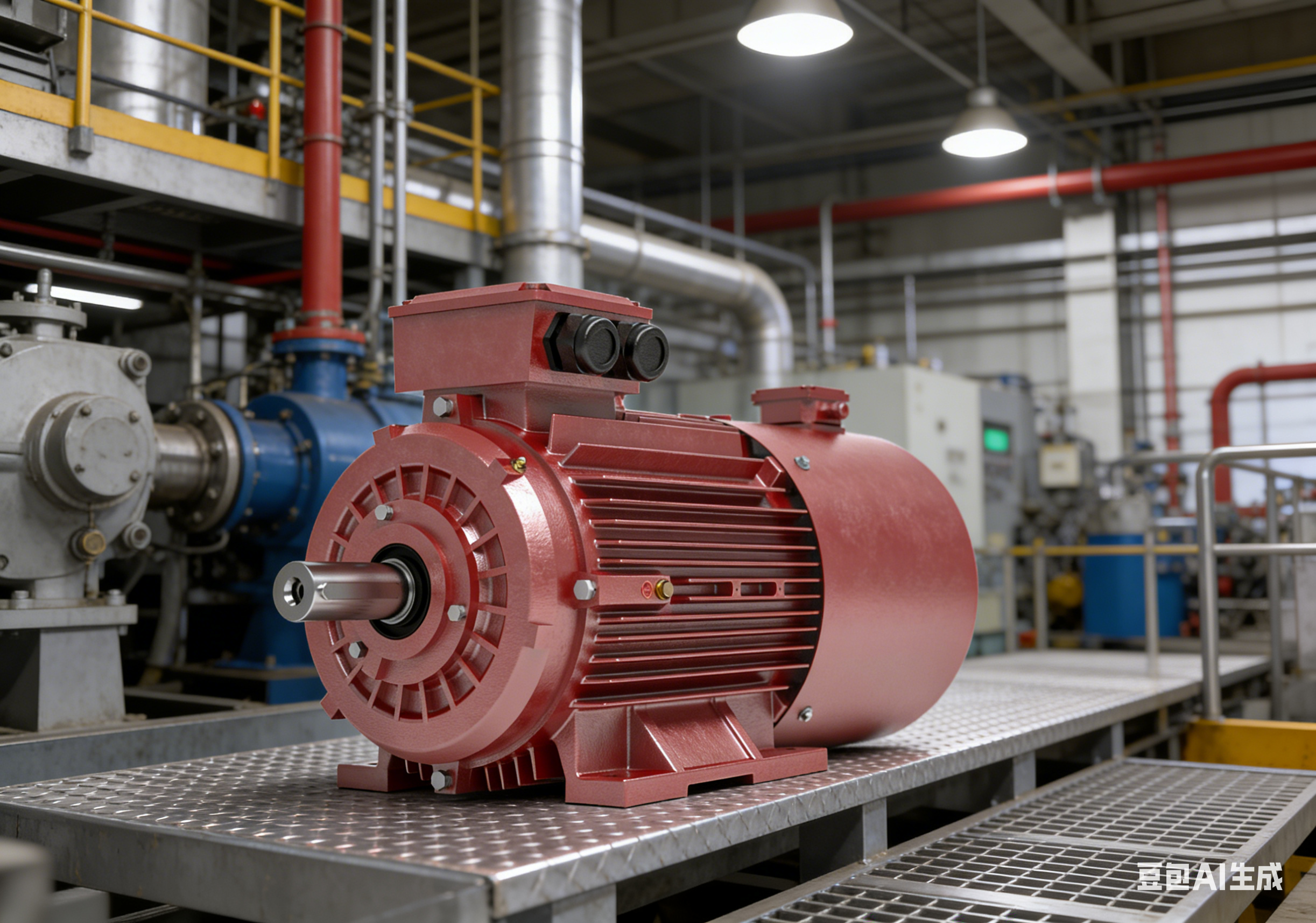
From an engineering application perspective, in the national standards, the conventional coaxial fan cooling method is defined as IC411 self-fan cooling mode, while the independent fan cooling method is defined as IC416 forced air cooling mode. The variable-frequency motor equipped with an independent fan can maintain the rated torque output at low speeds without the need for reduced capacity usage, making it more adaptable and some models even support delayed air supply during shutdown to completely dissipate the residual heat after equipment shutdown, providing comprehensive protection for the motor. Of course, the independent fan does have some drawbacks. After being installed, it will increase the equipment procurement and wiring costs, and the new air components also become potential failure points. Overload protection devices need to be matched, and it will also generate slight noise and power consumption, occupying a certain installation space. For variable-speed control only in the medium-high speed range and pump-fan type variable-torque loads, when the speed decreases, the load and heat generation decrease simultaneously, so no independent fan needs to be installed.
Post time: Oct-15-2026