
From the analysis of the structural characteristics of the shaft, efforts should be made to avoid sudden changes in diameter and slender shafts of large-diameter rotors during the design stage. During the manufacturing process, necessary measures should be taken to eliminate stress.
(1) Control of machining stress. For electric motor products, cylindrical blanks are mostly used for processing. Due to the structural characteristics of the shaft, it is basically a stepped structure with a thicker middle and thinner ends. The position where the diameter of the shaft changes is a part where stress is relatively concentrated. Therefore, it is necessary to reduce the opportunity of stress concentration by processing in multiple steps. At this position, processing with a transition fillet is very necessary to reduce machining stress. In the actual processing process, the transition fillet may be understood as a control of surface quality, but its most essential role is one of the measures to avoid stress.
(2) Elimination of welding stress. For welding stress, it only affects the shaft of the band plate, that is, welding a certain height of the band plate on the cylindrical blank to achieve the cooperation with the rotor core. Such shafts have more fracture cases.
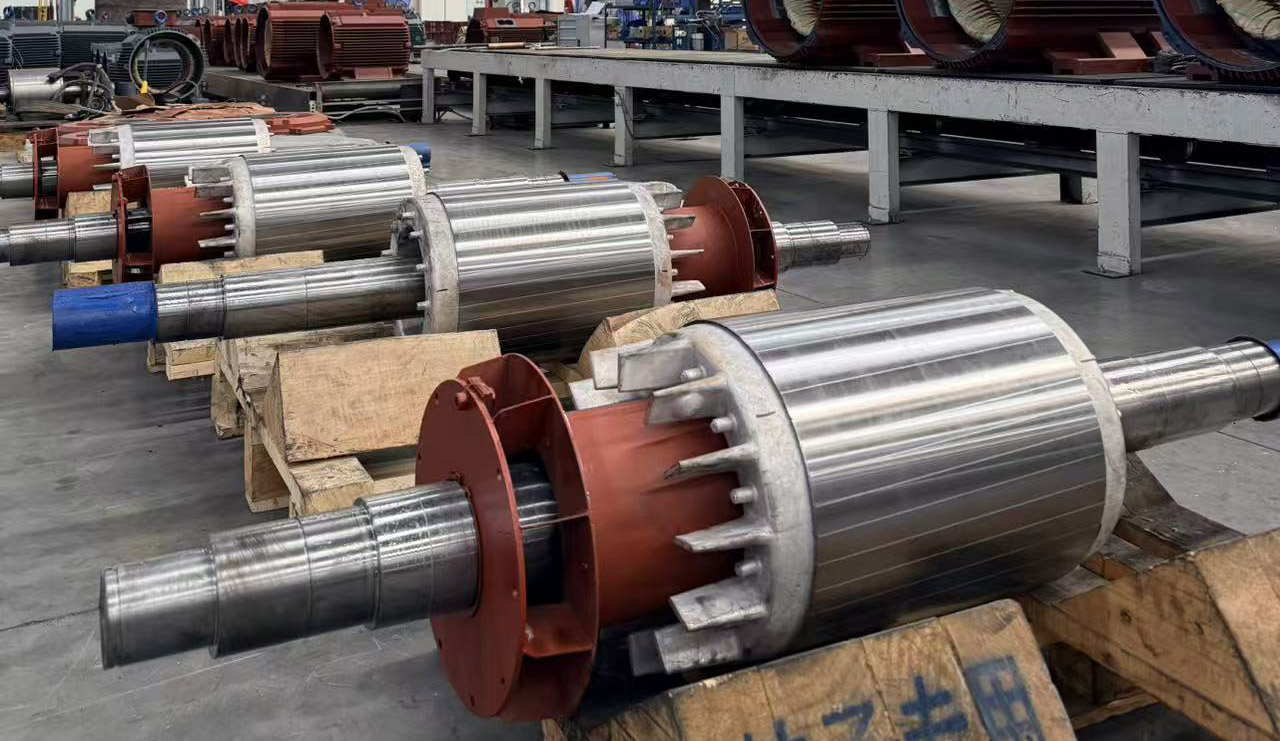
(3) Installation and control of the motor and transmission. For motors with relatively high power, it is not recommended to use belt pulley transmission. This type of transmission causes the motor shaft to be subjected to bending moments, and in severe cases, it can lead to the shaft breaking.
For this requirement, it is stipulated in the product technical conditions of the motors, and is also explained in the product operation and maintenance instructions provided by the motor manufacturers. However, this requirement may not always be implemented in actual usage. For motors that must use belt pulley transmission, especially for larger-sized motors, it is recommended to use cylindrical roller bearings at the driving end.
(4) The reliability of the motor installation base. From actual usage, it can be observed that some motor installation bases do not directly contact the ground but are elevated through a frame structure. In such cases, special attention must be paid to the reliability of the base. If the base becomes unbalanced, it is highly likely to cause shaft breakage due to the positional relationship between the motor and the driven equipment.
(5) Daily monitoring and measurement during the operation of the motor. During the operation of the motor, the placement of the motor itself and the relative position of the equipment have a significant impact on the operation quality. Periodic inspections and daily monitoring should be conducted to identify problems and correct them to prevent the occurrence of quality accidents.
Post time: Apr-29-2026