
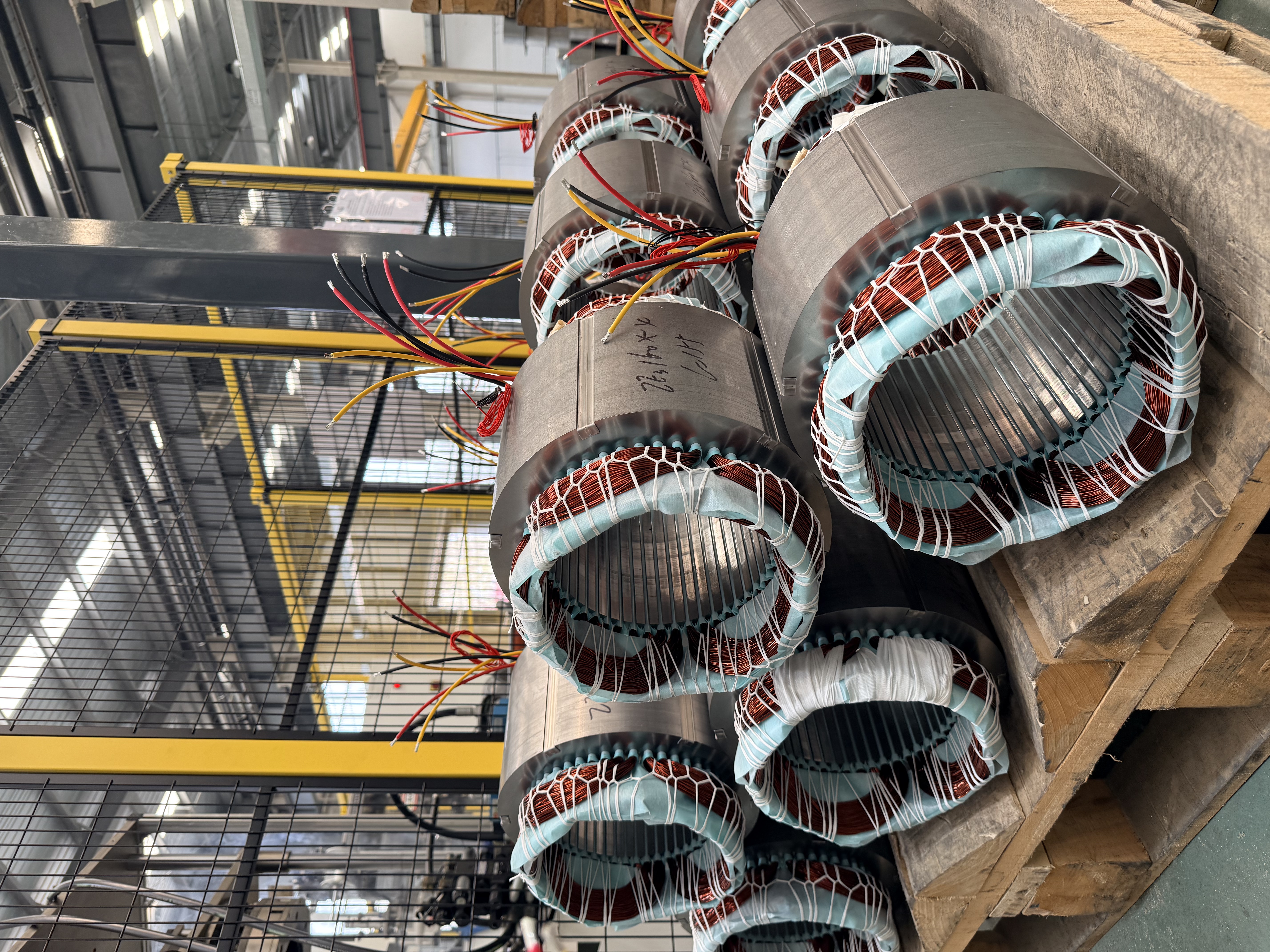
After the winding is impregnated with insulating varnish, the varnish will seep into the gaps of the coil and solidify, forming a complete and sealed insulating layer, which significantly improves the insulation performance of the winding. It can effectively resist the erosion of moisture, salt spray, oil stains, etc., and prevent the risks of leakage and short circuit. However, windings without impregnation can only rely on the insulation layer of the wire itself, which is weak in insulation protection. After getting damp, insulation breakdown is likely to occur, affecting the normal operation of the motor. In terms of heat conduction and dissipation as well as mechanical strength, the insulating varnish in the impregnated winding fills the gaps within the coil and between the coil and the core, significantly enhancing the heat conduction efficiency. It can quickly dissipate the heat generated during the operation of the winding, reducing the risk of overheating and aging.At the same time, the varnish layer solidifies the winding coil, slot wedges and the core into a single unit, making the winding structure more stable, more resistant to vibration and impact, and generating less noise during operation. The coil is also less likely to loosen and wear. In contrast, the winding coils without impregnation are loose, with poor air conduction in the gaps. During operation, the winding temperature rise is higher, and the vibration is more likely to wear through the insulation layer of the wire, causing wire breakage, and the noise is also more obvious.
Post time: Apr-16-2026