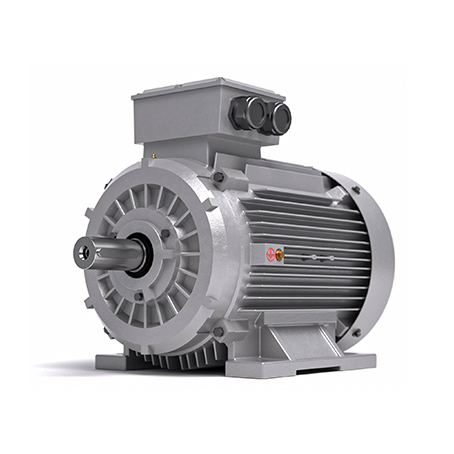
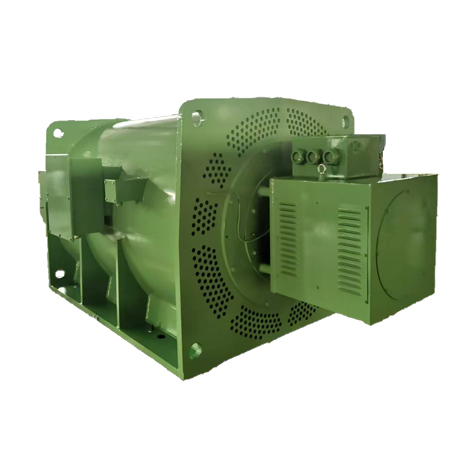
Pole Changing Motor Series for Permanent Magnet Applications
Explore our core product lineup engineered for high-efficiency permanent magnet motor systems
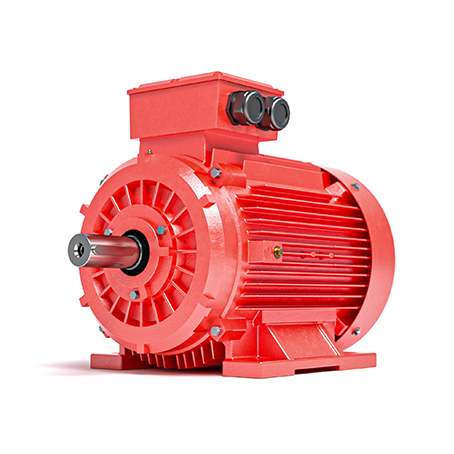
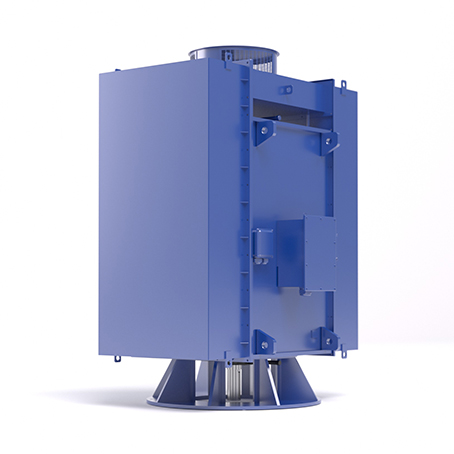
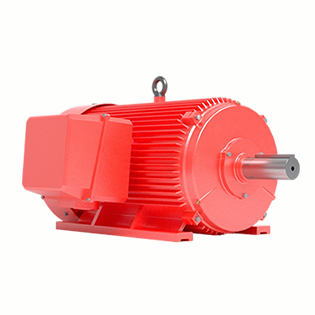

What Is a Pole Changing Motor for Permanent Magnet Motors?
A pole changing motor is a specialized type of alternating current (AC) induction motor engineered with multiple sets of stator windings or reconfigurable winding configurations, allowing the number of magnetic poles to be altered during operation. When this technology is integrated with or applied to permanent magnet (PM) motor systems, it delivers a powerful combination of discrete speed control, high torque at low speeds, and superior energy efficiency — making it one of the most compelling solutions in modern industrial electromechanical engineering.
Unlike traditional variable-frequency drives (VFDs) that modulate frequency electronically, pole changing motors achieve speed variation by switching between distinct pole configurations — for example, from 2-pole to 4-pole or from 4-pole to 8-pole operation. This mechanical-electrical hybrid approach offers robust reliability, reduced harmonic distortion, and improved power factor, particularly when permanent magnets are incorporated into the rotor design.
Key Advantage: Dual-Speed Efficiency
Pole changing technology applied to permanent magnet motors enables discrete speed steps without full inverter dependency, drastically reducing energy losses in variable-load applications such as pumps, fans, compressors, and conveyors.
The integration of permanent magnet rotors into pole changing motor architectures has opened new frontiers in industrial motor technology. PM materials — primarily neodymium iron boron (NdFeB) and ferrite magnets — provide constant excitation fields that significantly boost power density and reduce rotor copper losses compared to conventional induction motors. When these advantages are combined with pole-changing stator designs, the resulting motor achieves efficiency levels that can surpass IE4 Super Premium Efficiency classifications.
Technical Principles: How Pole Changing Works in Permanent Magnet Motors
Dahlander Winding Configuration
The most widely implemented pole changing mechanism is the Dahlander (or consequent pole) winding. In this design, the stator coils are reconnected via external switching contactors to either double or halve the number of effective magnetic poles. The synchronous speed of the motor is inversely proportional to the pole count — a 4-pole motor running at 50Hz operates at 1500 rpm synchronous speed, while switching to 2-pole configuration doubles the synchronous speed to 3000 rpm.
When a permanent magnet rotor is paired with this winding topology, engineers must carefully match the rotor's pole count to each stator configuration. Advanced designs utilize segmented or asymmetrically arranged PM arrays that can respond effectively to different stator pole counts, enabling true multi-speed operation with PM efficiency at each speed step.
Flux Switching and Variable Pole Permanent Magnet (VPPM) Design
Recent advancements have introduced the concept of Variable Pole Permanent Magnet motors, where the effective pole count is altered through sophisticated flux switching mechanisms. By selectively energizing different stator tooth segments and leveraging the asymmetric PM arrangement, the motor can transition between high-pole (low speed, high torque) and low-pole (high speed, lower torque) configurations. This innovation is particularly significant for electric vehicle powertrains, industrial servo systems, and wind turbine generators.
Flux Weakening vs. Pole Changing
Traditional PM motors extend speed range via flux weakening — injecting a demagnetizing d-axis current, which creates thermal and efficiency penalties. Pole changing offers an alternative path to extended speed range without compromising PM rotor integrity or motor efficiency at high speeds.
Comparison: Pole Changing PM Motor vs. Standard PM Motor
| Parameter | Standard PM Motor | Pole Changing PM Motor |
|---|---|---|
| Speed Control Method | VFD / Flux Weakening | Pole Switching + VFD (optional) |
| Efficiency at Low Speed | Moderate | High (optimized pole count) |
| Torque Density | High | Very High |
| Harmonic Distortion | Medium (VFD-dependent) | Lower (discrete switching) |
| Reliability | High | High (fewer inverter components) |
| Cost | Medium | Medium-High (advanced winding) |
| Best Application | Constant speed / servo | Variable load industrial drives |
Market Landscape & Industry Trends
Pole changing technology for permanent magnet motors is at the intersection of electrification, decarbonization, and smart manufacturing
Global Market Expansion
The global permanent magnet motor market is projected to exceed USD 70 billion by 2030, growing at a CAGR of over 8%. Pole changing variants are capturing an increasing share as industries demand multi-speed solutions without full inverter infrastructure. Asia-Pacific leads in adoption, particularly in China, South Korea, and Japan, driven by manufacturing automation and EV development programs.
Energy Efficiency Mandates
The European Union's Ecodesign Regulation (EU 2019/1781) mandates IE3 minimum efficiency for most motors, with IE4 and IE5 targets being rolled out progressively. Pole changing PM motors inherently achieve IE4+ ratings across both speed configurations, making them a preferred technology for compliance without sacrificing operational flexibility in variable-load scenarios.
Industrial Automation & Industry 4.0
Smart manufacturing and Industry 4.0 initiatives demand motors that integrate seamlessly with digital control systems. Modern pole changing PM motors feature embedded sensors, IoT-compatible condition monitoring, and predictive maintenance interfaces. This positions them as core actuators in automated production lines, robotic assembly systems, and intelligent conveyor networks.
EV & Mobility Applications
The electric vehicle revolution is accelerating demand for variable pole PM motors. Automotive OEMs are exploring pole-switching architectures for traction motors to achieve wide constant-power speed ranges without permanent flux weakening. This extends battery range and reduces thermal management requirements — critical for next-generation EV platforms targeting 500+ km range.
Water & Wastewater Industry
Municipal water treatment facilities and industrial process plants are upgrading pump systems with pole changing PM motors to achieve dramatic energy savings. Variable flow demands in water distribution systems are ideally matched to 2-speed motor operation — high speed for peak demand, low speed for off-peak — reducing annual energy consumption by 30-50% versus single-speed alternatives.
Renewable Energy Integration
Wind turbine generators and hydroelectric systems benefit from pole changing PM technology to operate efficiently across variable wind or water flow conditions. By matching the generator's effective pole count to the prevailing mechanical input speed, maximum power point tracking (MPPT) efficiency is enhanced without full power electronic converter losses in the main energy pathway.
In-Depth Application Scenarios
Pole changing permanent magnet motors deliver measurable performance advantages across critical industrial sectors
⛏️ Mining & Heavy Industry
Underground mining operations demand motors capable of delivering maximum torque at startup while operating efficiently at sustained running speeds. Pole changing PM motors address this challenge by providing 2× synchronous torque in high-pole configuration during load pickup, then transitioning to low-pole operation for efficient high-speed haulage. Combined with the elimination of rotor copper losses inherent to PM design, these motors reduce total cost of ownership in belt conveyor drives, jaw crusher applications, and ventilation systems — where energy costs represent over 70% of lifetime operational expenses.
🏭 Metallurgy & Steel Production
Rolling mills, continuous casting machines, and ladle cranes in steel plants require precise, responsive multi-speed operation under heavy loads. Pole changing PM motors offer stepped speed control with high dynamic torque response, minimizing mechanical shock during speed transitions. Their robust IP55/IP65 construction withstands the extreme temperatures, vibration, and electromagnetic interference characteristic of steelmaking environments — a critical advantage over sensitive servo systems.
🌬️ HVAC & Ventilation Systems
Large-scale HVAC systems in commercial buildings, data centers, and industrial facilities can achieve 20-40% energy savings by deploying pole changing PM motors in fan and blower applications. By operating at reduced pole count during peak load periods and switching to high-pole (low speed) configuration during partial load — which constitutes 60-80% of annual operating hours — these systems dramatically reduce lifecycle energy costs while meeting increasingly stringent building energy codes globally.
🛢️ Oil & Gas and Chemical Processing
Centrifugal compressors and reciprocating pumps in upstream oil production and downstream refining operations often require two distinct operating speeds corresponding to different process conditions. Pole changing PM motors eliminate the need for mechanical gearboxes or separate motor-pump assemblies, reducing installation footprint, maintenance requirements, and the risk of seal failures at speed-change mechanical interfaces. Their compatibility with ATEX Zone 1 and Zone 2 explosion-proof enclosures extends applicability to hazardous area classifications.
🚢 Marine & Naval Propulsion
Naval architects and marine engineers are increasingly specifying pole changing PM motors for podded propulsion systems and bow thrusters. The ability to switch between low-speed, high-torque maneuvering mode and high-speed, low-torque transit mode from a single compact motor unit reduces weight, improves vessel stability, and simplifies the electrical distribution architecture. Classification society approvals including CCS, ABS, and DNV — which Sunvim Motor holds — are essential for marine market access.
Sunvim Motor — Manufacturing Excellence Since 1963

Shandong Sunvim Motor Co., Ltd.
We started in 1963, has more than 60 years of researching and manufacturing experience on electric motors. Transformed in 2022, a high standard and modern production base of electric motors is fast growing.
Shandong Sunvim Motor Co., Ltd. is invested by Sunvim Group who has ten billions of market value. With 220 million RMB investments, it covers an area of 68,000 square meters, and with total construction area of 53,000 square meters. The company has advanced equipments of more than 400 sets, including manufacturing, testing and supporting facilities. The annual production capacity can reach 3 million kilowatts.
Now, a modern professional enterprise specializes in production, distribution, R&D and customer service of electric motors has been grown up. And the company is sailing forward under the cultivation of Sunvim Group.
SUNVIM has been well known and being recognized by many customers of the world. Our products are exported to Germany, Italy, Greece, Spain, Belgium, Denmark, South Africa, Slovakia, Australia, Singapore, Indonesia, Malaysia, and Taiwan.
Application Equipment for Pole Changing Permanent Magnet Motors
Get to know which are the Certificates that Sunvim has.


Pole Changing Motor — Project Presentation
SUNVIM has been well known and being recognized by many customers of the world. Our products are exported to Germany, Italy, Greece, Spain, Belgium, Denmark, South Africa, Slovakia, Australia, Singapore, Indonesia, Malaysia, and Taiwan.


LET'S OPTIMIZE YOUR SUPPLY CHAIN
Partner with Sunvim Motor for world-class pole changing permanent magnet motor solutions tailored to your industrial needs.
Explore Permanent Magnet MotorsComplete Motor Solutions for Permanent Magnet Applications
Browse our full range of pole changing and permanent magnet compatible motor products