
Slip Ring Induction Motor Solutions
Explore our core asynchronous electric motor product series engineered for industrial excellence
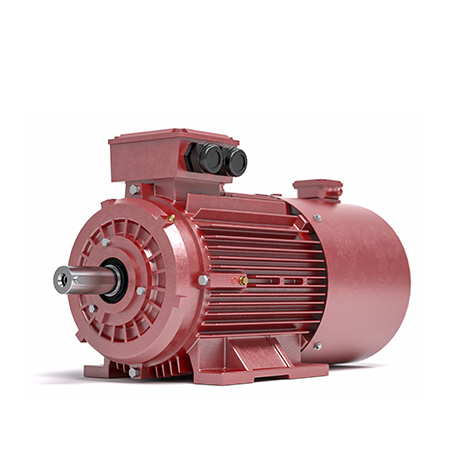

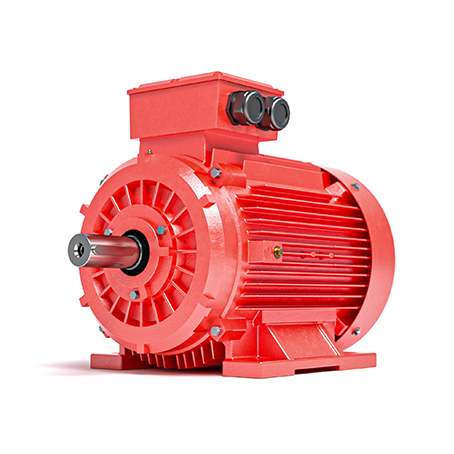
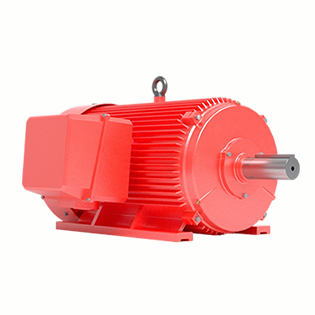
What Is a Slip Ring Induction Motor?
Understanding the core technology behind wound rotor asynchronous electric motors
Core Technology & Working Principle
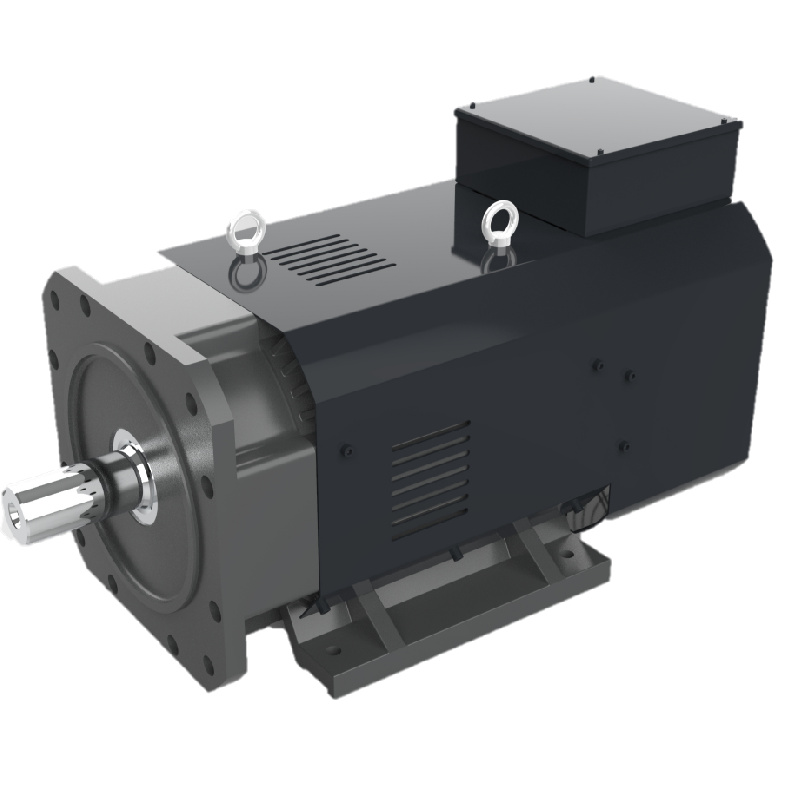
A Slip Ring Induction Motor, also known as a wound rotor induction motor, is a type of asynchronous electric motor where the rotor windings are connected to external resistance through slip rings and brushes. Unlike squirrel cage motors, the wound rotor construction allows precise control over starting torque, acceleration characteristics, and speed regulation — making it indispensable in heavy-duty industrial environments.
The motor operates on the principle of electromagnetic induction: a rotating magnetic field is generated in the stator windings, inducing currents in the rotor. The slip — the difference between synchronous speed and actual rotor speed — is what enables this current induction. By inserting external resistance into the rotor circuit via slip rings, engineers can dramatically improve starting performance and achieve smooth, controlled acceleration under full load conditions.
This controllability distinguishes slip ring induction motors from their squirrel cage counterparts. In applications demanding high starting torque with low starting current, adjustable speed ranges, and reliable performance under varying load conditions, the wound rotor design consistently delivers superior results.
Structural Advantages Over Squirrel Cage Motors
The wound rotor of a slip ring induction motor features three-phase windings connected to external resistance banks through carbon brushes bearing on slip rings mounted on the rotor shaft. This construction provides several structural advantages that make it the preferred choice for demanding applications.
Starting Performance: By introducing resistance into the rotor circuit at startup, the motor achieves full-load torque at reduced current draw — typically 1.5 to 2 times rated current versus 5 to 7 times for direct-on-line squirrel cage starts. This protects both the motor and the connected power infrastructure.
Speed Control: Variable resistance in the rotor circuit enables speed adjustment below synchronous speed, providing a simple yet effective method of speed regulation for applications like conveyors, compressors, and industrial fans where process requirements change frequently.
Thermal Management: Heat generated during starting is dissipated in the external resistors rather than within the motor windings, significantly extending motor lifespan in applications requiring frequent starts or reversals.
⚡ Key Technical Advantages
Why slip ring induction motors remain the backbone of industrial asynchronous drive systems worldwide
Controllable Starting Torque
External rotor resistance enables starting torque up to 250% of rated torque, ideal for high-inertia loads like ball mills, crushers, and large fans.
Reduced Starting Current
Starting current limited to 1.5–2.5× rated current, protecting grid infrastructure and reducing energy cost spikes during machine startup sequences.
Superior Thermal Protection
Starting heat dissipated externally in resistor banks, not inside windings — dramatically improving motor longevity in frequent-start duty cycles.
Variable Speed Operation
Rotor resistance variation provides adjustable speed ranges of 50–100% of synchronous speed, enabling flexible process control without expensive VFD systems.
Robust Construction
Heavy-duty frame construction with IP55/IP65 protection ratings, Class F/H insulation systems, and advanced bearing arrangements for 24/7 operation.
Global Certifications
ISO9001:2015, CE, UKCA, UL, SABS, CCS, ABS, DNV certified — meeting international standards for industrial, marine, and offshore applications.
Industrial Application Scenarios
Deep-dive into where slip ring induction motors deliver unmatched performance across critical industries


⛏️ Mining & Mineral Processing
Slip ring motors power ball mills, rod mills, jaw crushers, and conveyor systems in underground and open-pit mining operations. Their ability to deliver high starting torque at reduced current makes them ideal for starting fully loaded conveyors — a critical requirement in continuous mining operations where stopping and restarting under load is unavoidable. Modern installations pair wound rotor motors with liquid resistance starters or thyristor-controlled resistance banks for precise torque management across the entire acceleration ramp.
🏗️ Metallurgy & Steel Industry
Rolling mills, blast furnace blowers, continuous casting machines, and ladle cranes in steel plants rely heavily on slip ring induction motors for their superior speed control and reversing capabilities. The steelmaking process demands motors capable of repeated full-load starts, dynamic braking, and precise speed regulation — requirements that wound rotor motors fulfill with exceptional reliability and operating life even in extreme temperature and dust environments.
🌊 Marine & Offshore Applications
Shipboard pumps, winches, anchor windlasses, and propulsion auxiliary systems benefit from the wound rotor motor's inherent ability to withstand the vibration, humidity, and salt air conditions present in marine environments. DNV, ABS, and CCS-certified slip ring motors from Sunvim are deployed on commercial vessels worldwide, meeting the stringent safety and reliability requirements of classification societies for mission-critical marine equipment.
💨 Power Generation & Energy
Boiler feed pumps, induced draft fans, forced draft fans, and cooling tower fans in thermal power plants utilize large slip ring motors for their starting controllability and long-term operating efficiency. In wind energy, wound rotor designs form the basis of doubly-fed induction generators (DFIG) — one of the most widely deployed variable-speed wind turbine configurations globally — connecting rotor windings through power electronics to enable sub- and super-synchronous operation.
🏭 Cement & Construction Materials
Rotary kilns, raw mills, cement mills, and conveying systems in cement plants operate under extreme starting conditions with very high inertia loads. Slip ring induction motors with rotor resistance control provide the smooth, extended acceleration curves necessary to prevent mechanical shock to gearboxes and couplings while keeping electrical demand within acceptable limits during start-up sequences that may last several minutes.
🛢️ Oil, Gas & Petrochemical
Compressors, pumps, agitators, and extruders in petroleum refining and chemical processing plants demand motors with reliable performance in potentially hazardous atmospheres. Explosion-proof wound rotor motors in Ex d, Ex e, and Ex nA protection categories are deployed in ATEX and IECEx classified zones, providing the starting performance and speed control capabilities required for large reciprocating compressors and centrifugal pump trains in continuous process environments.
Market Trends & Development Outlook
The commercial and industrial landscape shaping the future of slip ring induction motor technology
Global Market Growth & Commercial Drivers
The global asynchronous electric motor market, valued at over USD 120 billion, continues to expand driven by rapid industrialization in Asia-Pacific, infrastructure investment in emerging markets, and the growing energy transition requiring more sophisticated motor-drive systems. Slip ring induction motors occupy a specialized but highly valuable segment of this market, particularly in applications where the unique starting and speed control characteristics of wound rotor technology justify the premium over squirrel cage alternatives.
China's industrial modernization programs, India's manufacturing expansion under "Make in India" initiatives, Southeast Asia's industrial base growth, and Africa's mining sector development all represent significant demand drivers for heavy-duty slip ring motors in the 15kW to several megawatt power range. Infrastructure projects including ports, railways, water treatment plants, and renewable energy installations further support sustained market demand.
The push for energy efficiency legislation globally — including IE3, IE4, and emerging IE5 efficiency standards under IEC 60034-30 — is driving motor manufacturers to integrate premium efficiency designs into wound rotor platforms, combining the starting performance advantages of slip ring technology with the operational efficiency demanded by modern industrial sustainability programs.
Technological Evolution & Smart Integration
The integration of digital monitoring and predictive maintenance technologies is transforming slip ring induction motor operation. IoT-enabled vibration sensors, thermal imaging integration, slip ring condition monitoring systems, and brush wear indicators now allow maintenance teams to predict failures weeks in advance — dramatically reducing unplanned downtime in critical production processes.
Advanced thyristor-based rotor resistance control systems are replacing traditional liquid starters and stepped resistance banks in new installations, providing smoother torque control, faster response times, and integration with plant SCADA systems. This digital overlay significantly extends the competitive lifespan of wound rotor motor technology against pure VFD-driven squirrel cage alternatives.
The doubly-fed induction generator (DFIG) application in wind energy represents perhaps the most significant growth area for slip ring technology, with multi-megawatt DFIG systems deployed across onshore and offshore wind farms worldwide. As wind capacity expands toward the terawatt scale globally, the demand for large wound rotor machines and associated power converters continues to grow substantially year on year.
Meanwhile, hybrid configurations combining slip ring motors with modern variable frequency drive technology offer performance characteristics exceeding either technology alone — wide speed ranges, precise torque control, regenerative braking capability, and the fault-tolerance benefits of a proven electromechanical design — positioning wound rotor technology as a key enabler of next-generation industrial automation.
Sunvim Motor — Manufacturing Excellence
60+ years of engineering expertise behind every slip ring induction motor we manufacture
About Shandong Sunvim Motor Co., Ltd.
A world-class electric motor manufacturer trusted by global industrial leaders

Shandong Sunvim Motor Co., Ltd.
We started in 1963, has more than 60 years of researching and manufacturing experience on electric motors. Transformed in 2022, a high standard and modern production base of electric motors is fast growing.
Shandong Sunvim Motor Co., Ltd. is invested by Sunvim Group who has ten billions of market value. With 220 million RMB investments, it covers an area of 68,000 square meters, and with total construction area of 53,000 square meters. The company has advanced equipments of more than 400 sets, including manufacturing, testing and supporting facilities. The annual production capacity can reach 3 million kilowatts.
Now, a modern professional enterprise specializes in production, distribution, R&D and customer service of electric motors has been grown up. And the company is sailing forward under the cultivation of Sunvim Group.
SUNVIM has been well known and being recognized by many customers of the world. Our products are exported to Germany, Italy, Greece, Spain, Belgium, Denmark, South Africa, Slovakia, Australia, Singapore, Indonesia, Malaysia, and Taiwan.
🏆 International Certifications
ISO9001:2015 | CE | UKCA | UL | SABS | CCS | ABS | DNV
Slip Ring Motor Project Presentations
SUNVIM has been well known and being recognized by many customers of the world. Our products are exported to Germany, Italy, Greece, Spain, Belgium, Denmark, South Africa, Slovakia, Australia, Singapore, Indonesia, Malaysia, and Taiwan.


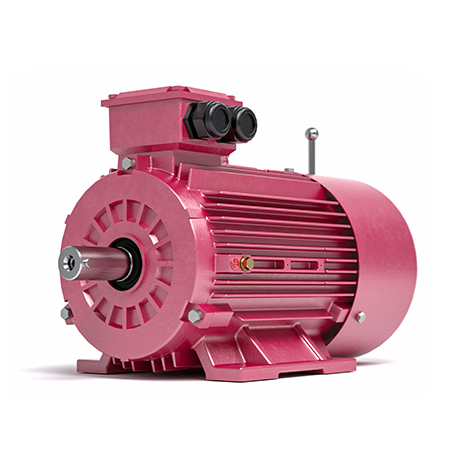
Complete Asynchronous Electric Motor Range
Full product portfolio for slip ring induction motor and asynchronous motor applications across all industrial sectors


LET'S OPTIMIZE YOUR SUPPLY CHAIN
Partner with Sunvim Motor for world-class slip ring induction motors and asynchronous electric motor solutions. 60+ years of engineering excellence, global certifications, and unmatched technical support.