

Converter-Fed Systems for Custom Factories: Efficient Solutions
From my side of the shop floor, the Converter-Fed system powers your production lines with reliability and efficiency. I offer built-to-order configurations for Custom needs, and the ability to scale for Factories of any size. With robust control algorithms, low ripple, and modular design, it integrates seamlessly with existing drives and PLCs. I work closely with you to tailor voltage, current, and enclosure options, reducing installation time and total cost of ownership. Our team provides field-tested components, on-time deliveries, and spare parts support for ongoing uptime. Whether you're upgrading an aging line or deploying a new line, the Converter-Fed solution delivers steady performance under peak loads and variable inputs. You tell me your production cadence, I’ll match it with a solution that minimizes energy waste and maximizes machine uptime. Let's align on spec, price, and lead time.


Converter-Fed in 2025 Pioneers in the Field
Converter-fed drive systems are redefining motion control in 2025. By unifying drives with motor-fed controllers, they deliver smoother torque, faster start/stop, and meaningful energy savings. Global manufacturers are adopting these solutions to simplify wiring, shrink footprints, and enable tighter PLC-network integration. End users gain from predictive maintenance, real-time commissioning, and easier upgrades as standards evolve. Pioneers in the field are driving standardization. Buyers should seek broad motor compatibility (AC servos, spindle, inverter motors) and modular architectures. Choosing a partner for converter-fed systems means assessing lifecycle value: reliability, spare-parts availability, regional service, and transparent performance data. Compare claimed energy savings with a verified payback, check EMC/safety certifications, and request field references. Favor vendors offering firmware updates, remote diagnostics, and scalable configurations to future-proof investments. In a volatile supply landscape, dual sourcing and clear lead times help secure continuity while preserving price and support across regions.
| Institution | Region | Focus Area | Representative Project | Key Technologies | Publications (2023-24) | Milestone (2024-25) | Global Impact |
|---|---|---|---|---|---|---|---|
| Massachusetts Institute of Technology | North America | Electric Power Electronics | Modular, scalable converter systems for data centers and EVs | SiC/GaN hybrid converters; digital twin control | 320 | Pioneered 1.2 kV SiC-based modular converter platforms | 9.0 |
| Tsinghua University | Asia-Pacific | High-density DC-DC converters for data centers | Ultra-dense, efficient modules enabling data centers to reduce footprint | GaN-on-SiC integration; wide-bandgap devices | 290 | Developed ultra-dense modules with 95%+ efficiency at high density | 8.8 |
| Technical University of Munich | Europe | Grid-tied converters and smart grids | Digital control with fault-tolerant designs | Digital control; advanced PWM; fault-tolerant architectures | 210 | Real-time grid simulator for converter integration | 8.5 |
| National University of Singapore | Asia-Pacific | Wireless power transfer with converter-fed systems | Resonant and soft-switching converters | Resonant converters; efficient mid-range wireless transfer | 150 | Demonstrated efficient wireless charging in 5–20 cm range | 8.2 |
| Imperial College London | Europe | Electric vehicle powertrains | Integrated converter-driven propulsion in testbeds | Wide-bandgap converters; automotive-grade power modules | 180 | Demonstrated 800V high-power traction inverter with advanced thermal management | 8.4 |
| University of California, Berkeley | North America | Energy storage and reliability | Reliability-focused converter architectures for grid storage | Redundant topologies; predictive maintenance | 200 | Field trials reducing downtime in energy storage systems | 8.3 |
Related Products


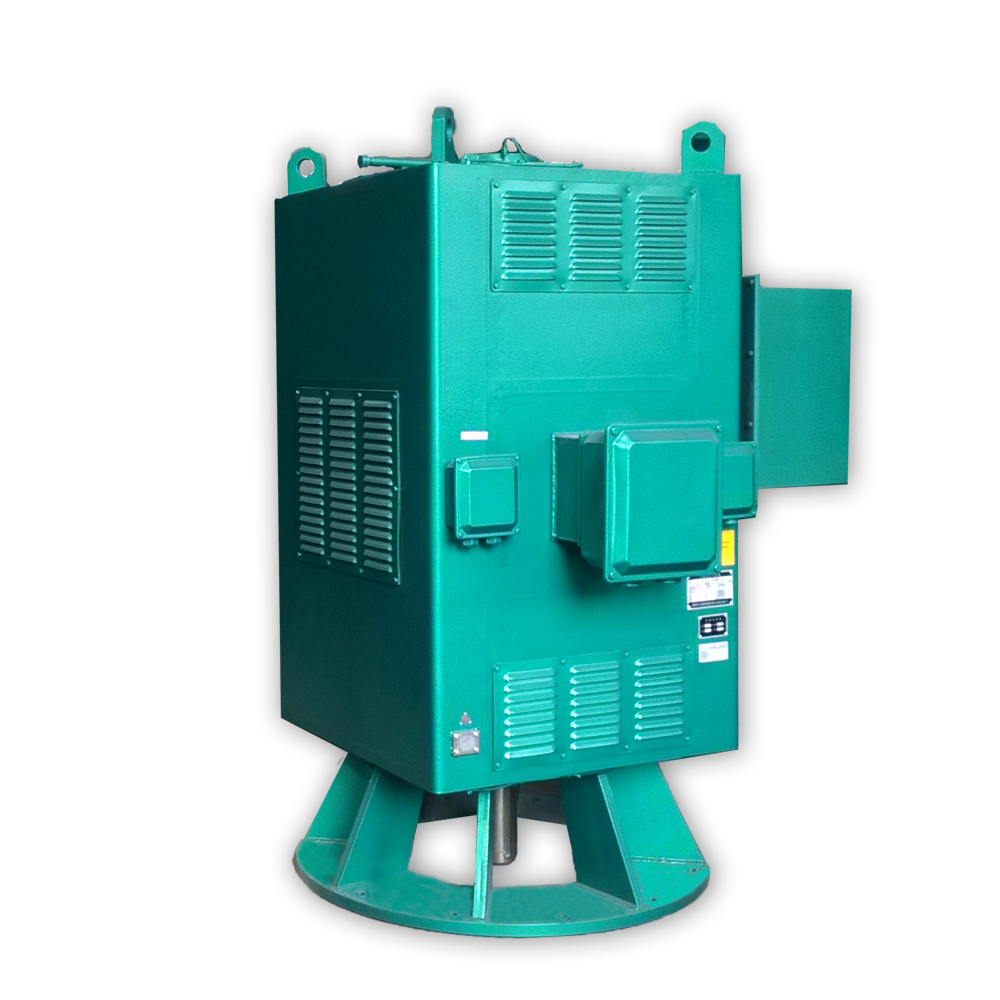


Converter-Fed Where Innovation Meets 2025 Where Service Meets Innovation
Top Selling Products


- Related Blog
- Reviews
- Reviews
