Variable Speed Motor Solutions
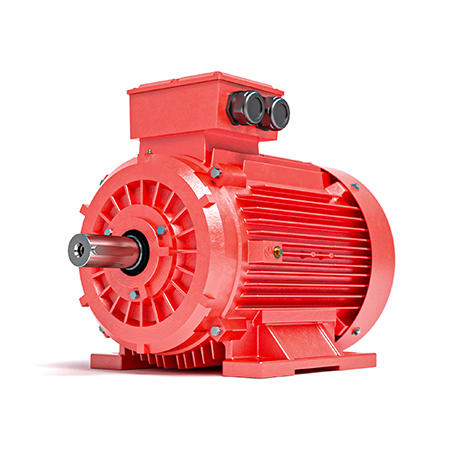
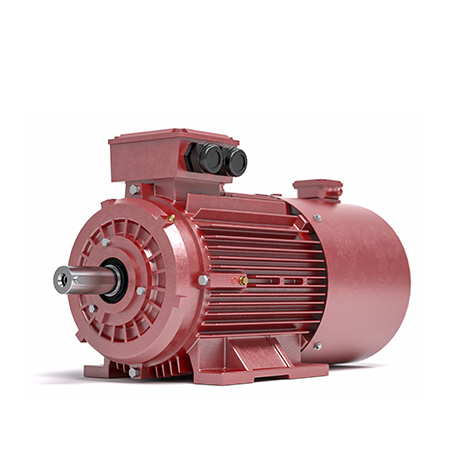
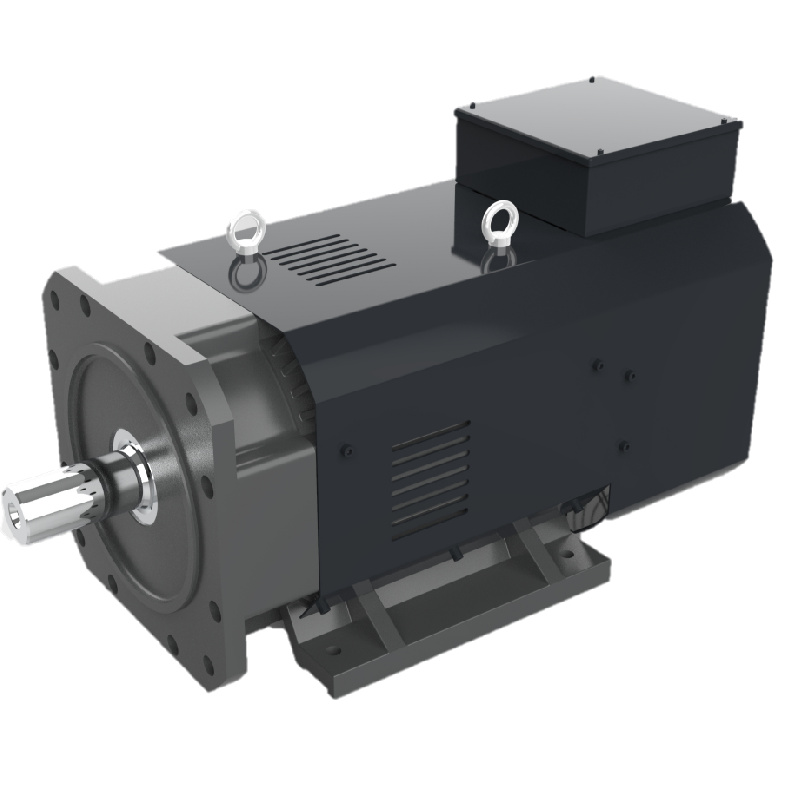
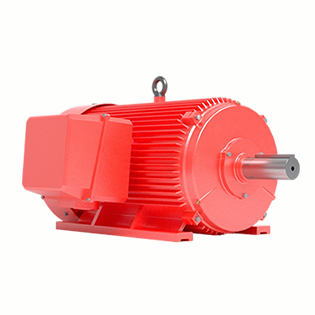
Explore our premium slip ring induction motor product lines designed for precise variable speed control in industrial environments.
What Is a Slip Ring Induction Motor?
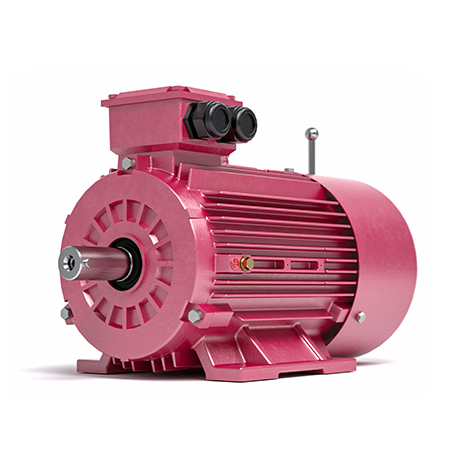
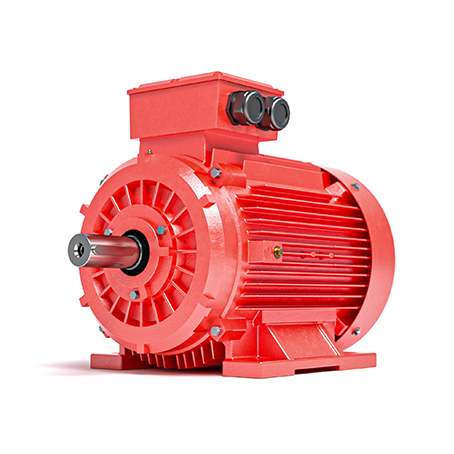
A slip ring induction motor — also known as a wound rotor induction motor — is a type of three-phase induction motor in which the rotor winding is not short-circuited internally, but instead is connected to external resistances through slip rings and brushes. This design allows for significant control over starting torque, acceleration characteristics, and operating speed, making it one of the most versatile choices for variable speed motor applications in heavy industry.
Unlike squirrel cage motors, the external rotor resistance of a slip ring induction motor can be varied to adjust the speed-torque curve dynamically. By increasing the external resistance, the speed of the motor can be reduced while maintaining adequate torque. This inherent capability for variable speed operation without complex electronic inverters has historically made slip ring motors a preferred solution for high-inertia loads such as cranes, hoists, mills, and large fans.
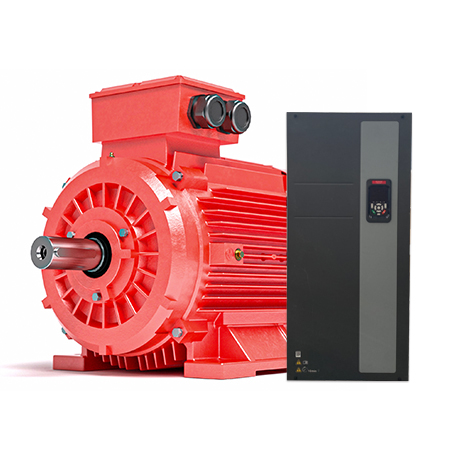
In modern industrial applications, slip ring induction motors are frequently combined with advanced power electronics — including variable frequency drives (VFDs) and static Kramer drives — to achieve highly efficient, wide-range speed control. This combination positions the slip ring motor as a bridge technology between classical electromechanical systems and modern smart manufacturing platforms.
⚙️ Core Technical Advantages for Variable Speed Control
Industrial Market Status & Commercial Landscape
The global market for variable speed motors — including slip ring induction motors — has experienced consistent growth driven by accelerating industrial automation, energy efficiency mandates, and the rapid expansion of renewable energy infrastructure. According to industry analysis, the global electric motor market is projected to exceed USD 180 billion by 2030, with variable speed motor segments growing at a compound annual rate of over 7%.
Slip ring induction motors continue to hold a significant market share in heavy industrial sectors where the mechanical load characteristics demand robust, controllable torque over a wide speed range. Industries such as mining, metallurgy, cement production, marine propulsion, and large-scale HVAC systems remain the primary consumers of slip ring variable speed motor technology.
Key Commercial Drivers in 2024–2030
- Energy Efficiency Regulations: Government policies in the EU, North America, and China are enforcing IE3 and IE4 efficiency standards, pushing industries to upgrade aging fixed-speed motors to variable speed solutions.
- Industrial Digitalization: The integration of IoT sensors, predictive maintenance platforms, and Industry 4.0 architectures is creating demand for motors compatible with smart monitoring systems.
- Renewable Energy Expansion: Wind power, hydroelectric, and tidal energy systems increasingly utilize wound rotor motors for their inherent variable speed capability and grid synchronization characteristics.
- Mining & Resource Industry: Global demand for minerals and rare earth elements is driving investments in large-scale mining equipment where slip ring motors provide unmatched torque control for ore crushers, ball mills, and conveyor systems.
- Emerging Market Industrialization: Rapid infrastructure development across Southeast Asia, Africa, and South America is opening substantial new markets for industrial variable speed motor systems.
🚀 Development Trends: The Future of Slip Ring Motors
🧠 AI-Driven Motor Control
Artificial intelligence algorithms are being integrated into motor control systems to enable real-time adaptive speed tuning, predictive fault detection, and autonomous energy optimization across variable load cycles.
🌿 IE4 & IE5 Ultra-High Efficiency
Next-generation slip ring designs incorporating premium magnetic materials and advanced winding geometries are approaching IE4 super-premium efficiency levels, reducing operational energy costs by up to 15%.
📡 IoT Remote Monitoring
Embedded vibration sensors, temperature monitoring, and cloud-connected diagnostic platforms are transforming slip ring motors into intelligent assets within smart factory ecosystems.
🔋 Regenerative Energy Recovery
Advanced slip power recovery systems (Scherbius drives) can return excess rotor energy to the grid during speed reduction, achieving overall system efficiencies exceeding 95%.
🏗️ Modular & Scalable Design
Modern slip ring motors are being designed with modular frame architectures, enabling rapid customization for frame sizes from IEC 100 to IEC 630 and beyond for large industrial projects.
🌊 Marine & Offshore Applications
The growing offshore wind and marine engineering sectors are adopting ruggedized, salt-spray-resistant slip ring motor variants engineered for harsh maritime environments.
Deep-Dive Application Scenarios
Mining Machinery: The High-Torque Frontier
In underground and open-pit mining operations, slip ring induction motors are the workhorse behind ball mills, rod mills, jaw crushers, and large-diameter conveyor drives. The ability to insert rotor resistance allows operators to achieve smooth, controlled acceleration of extremely high inertia loads — protecting mechanical transmission systems and reducing peak energy demand during start-up. Modern mining operations in Chile, Australia, and South Africa routinely deploy slip ring motors rated 500 kW to 10 MW for single drive applications.
Metallurgical & Steel Industry: Precision at Extreme Temperatures
Rolling mills, continuous casting machines, and ladle cranes in steel plants demand variable speed control with exceptional torque response. Slip ring motors operating with thyristor-controlled rotor resistance systems provide the millisecond-level torque response required for precise material thickness control in cold rolling applications. High ambient temperature tolerance and robust insulation systems make wound rotor motors uniquely suited for the thermal extremes of metallurgical environments.
Large Fan & Pump Systems: Energy Savings at Scale
Industrial ventilation fans in tunnels, power plants, and chemical facilities represent one of the largest applications of variable speed motor technology. By operating a slip ring motor at reduced speed — even a 20% speed reduction reduces fan power consumption by nearly 50% due to the cube law relationship between speed and power — industrial operators achieve dramatic energy savings. When coupled with static Kramer drives, these systems recover rotor slip energy back to the grid, delivering overall system efficiencies exceeding traditional throttle-controlled fixed-speed solutions by 25–40%.
Crane & Hoist Systems: Safety-Critical Speed Control
Overhead cranes, ship-to-shore gantry cranes, and industrial hoists require precise, smooth speed control at all load levels — from no-load positioning to full-rated load lifting and lowering. Slip ring induction motors have been the standard for crane duty applications for decades because of their ability to provide creep speed (5–10% of rated speed) with stable torque at all points of operation. Modern crane control systems pair slip ring motors with sophisticated resistor banks and programmable logic controllers (PLCs) for fully automated, multi-axis coordination.
Wind Power Generation: Doubly-Fed Induction Generator
Perhaps the most technologically sophisticated application of slip ring motor principles is the Doubly-Fed Induction Generator (DFIG) used in variable speed wind turbines. In this configuration, the stator is connected directly to the grid while the rotor — accessed through slip rings — is connected to the grid via a bidirectional power converter. This arrangement allows the wind turbine to operate across a wind speed range of approximately ±30% around synchronous speed while delivering maximum power extraction. The majority of modern utility-scale wind turbines in the 2 MW to 8 MW range utilize DFIG technology based on wound rotor principles.
Water Treatment & Municipal Infrastructure
Large municipal water pumping stations and wastewater treatment facilities increasingly deploy variable speed wound rotor motors for primary pumping duties. Variable flow control responding to real-time demand signals eliminates the energy waste of traditional bypass and throttle methods, while the robust construction of slip ring motors ensures 20+ year service life even in humid, corrosive environments.
Variable Speed Motor Application Industries


About Shandong Sunvim Motor Co., Ltd.

Shandong Sunvim Motor Co., Ltd.
We started in 1963, has more than 60 years of researching and manufacturing experience on electric motors. Transformed in 2022, a high standard and modern production base of electric motors is fast growing.
Shandong Sunvim Motor Co., Ltd. is invested by Sunvim Group who has ten billions of market value. With 220 million RMB investments, it covers an area of 68,000 square meters, and with total construction area of 53,000 square meters. The company has advanced equipments of more than 400 sets, including manufacturing, testing and supporting facilities. The annual production capacity can reach 3 million kilowatts.
Now, a modern professional enterprise specializes in production, distribution, R&D and customer service of electric motors has been grown up. And the company is sailing forward under the cultivation of Sunvim Group.
SUNVIM has been well known and being recognized by many customers of the world. Our products are exported to Germany, Italy, Greece, Spain, Belgium, Denmark, South Africa, Slovakia, Australia, Singapore, Indonesia, Malaysia, and Taiwan.
Certifications & Quality Standards
Get to know which are the Certificates that Sunvim has. Our motors meet the most demanding international standards for quality, safety and performance.
Variable Speed Motor Project Presentation
SUNVIM has been well known and being recognized by many customers of the world. Our products are exported to Germany, Italy, Greece, Spain, Belgium, Denmark, South Africa, Slovakia, Australia, Singapore, Indonesia, Malaysia, and Taiwan.


Complete Variable Speed Motor Product Range
Sunvim offers a comprehensive portfolio of electric motors for every variable speed application — from standard IE1/IE2 to ultra-efficient synchronous reluctance and permanent magnet solutions.